
Pool heat pumps for Perth pools
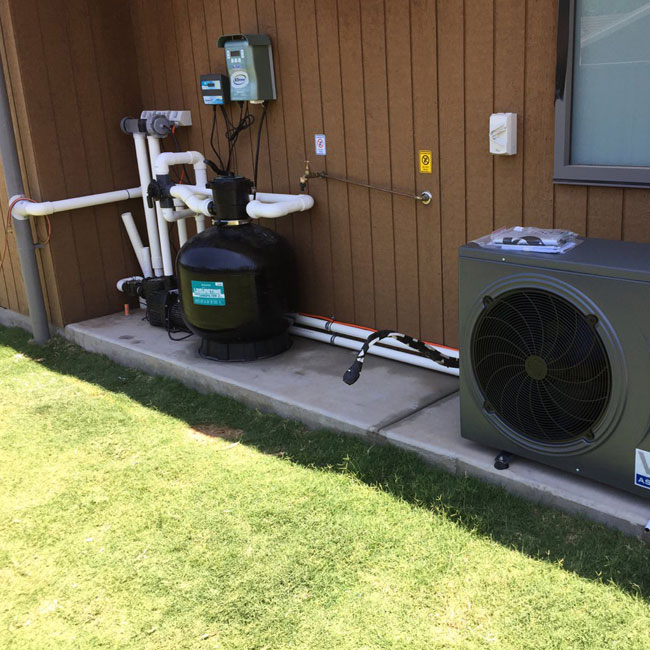
How a pool heat pump works
A pool heat pump uses electricity to heat your pool, but it does not make heat the way an element does. It works like a reverse-cycle air conditioner: it pulls heat out of the outside air and moves it into your pool water. That is why it uses far less power than a resistance heater for the same amount of heat.
Because it runs on power, not sunshine, a heat pump heats your pool on cloudy days, at night and through winter. It gives you heating where solar is not an option: not enough roof space, a roof facing the wrong way, or a pipe run to the roof that cannot be done.
Year-round swimming
Set the temperature you want and the heat pump holds it, whatever the weather.
Standard or inverter: which heat pump?
There are two types of pool heat pump on the market, so there is one for every budget.
Standard (on/off) heat pumps
The compressor runs at full speed until the pool reaches temperature, then switches off. Simple and reliable, with a lower purchase cost.
Inverter heat pumps
The compressor slows down as the pool gets close to temperature instead of switching on and off. That gives a higher Coefficient of Performance (COP), lower power use, quieter running and a steadier water temperature, so you get swimming sooner.
What to look for in a pool heat pump
Energy efficiency
Check the COP: how many kilowatts of heat you get out for each kilowatt of power you put in. The higher the number, the cheaper it is to run.
A quiet compressor
Essential on a tight suburban block where the unit sits near bedrooms, a patio or the neighbour's fence.
Built for where it lives
The heat exchanger and casing should be made from materials that last near pool chemicals and, on the coast, salt air.
The right size
Too small and it struggles in cooler months; too big and you pay for capacity you don't need. We size the unit to your pool's volume, the temperature you want and when you want to swim.
Where it goes
A heat pump needs open air around it, a level base, power and a short run to your pool equipment. We plan the position with you.
Solar or heat pump?
Both heat your pool well. The right one depends on your roof, your block and how often you want to swim.
| Most Perth homes Solar pool heating Free energy from the sun | Pool heat pump Heat on demand, in any weather | |
|---|---|---|
| Energy source | Advantage: The sun, free | Electricity |
| Running cost | Advantage: Very low, the pump only | Higher than solar, lower with an inverter model |
| Swimming season | Up to 8 months a year | Advantage: All year |
| Heats on cloudy days | Less | Advantage: Yes |
| What it needs | Roof area of at least 80% of the pool's surface, ideally facing north | Ground space near the pool equipment and a power supply |
| Noise | Advantage: Silent on the roof | Compressor and fan; inverter models are quieter |
| Best for | Most Perth homes with a sunny roof | Small or shaded roofs, all-year swimmers, spas |
Get a solar quote |
Get a heat pump quote |
Or use both. Many Perth homes are a good fit for solar, and some use both: solar does most of the work in spring, summer and autumn, and the heat pump tops up when the sun can’t.
Not sure which suits you? Tell us about your pool and we will recommend one, or both.
Heat pump brands we supply and install
Get a heat pump quote

Pool heat pump FAQs
-
How does a pool heat pump work?
A heat pump pulls heat from the outside air and transfers it into your pool water, the same way a reverse-cycle air conditioner heats a room. It uses electricity to run the compressor and fan, but it moves several times more heat into the pool than the power it uses.
-
What is the difference between an inverter and a standard pool heat pump?
A standard heat pump runs flat out until the pool is warm, then switches off. An inverter model varies its speed, slowing down as the pool reaches temperature. That gives better efficiency (a higher COP), quieter running and a more even water temperature.
-
How much does a pool heat pump cost to run?
It depends on the size of your pool, the temperature you want, the time of year and the unit's COP. An inverter heat pump, a pool blanket at night and running it during the day (or from rooftop solar power) all bring running costs down. We can talk through what to expect for your pool when we quote.
-
What size heat pump do I need for my pool?
The right size depends on your pool's volume, how warm you want it, the months you want to swim and whether you use a pool blanket. An undersized unit struggles in winter; an oversized one costs more than it needs to. We size the heat pump for your pool before we quote.
-
Are pool heat pumps noisy?
They make some noise from the compressor and fan, about like an air conditioner's outdoor unit. Inverter models are quieter because they spend most of their time running slowly. Placement matters too: we help you find a spot away from bedrooms and neighbours.
-
Is a heat pump better than solar pool heating?
Neither is better for everyone. Solar is cheaper to run and suits most Perth homes with a sunny roof. A heat pump costs more to run but heats in any weather, so it suits pools with little roof space or owners who want to swim all year. Some pools use both.
-
Do pool heat pumps work in a Perth winter?
Yes. Perth's mild winters suit heat pumps well. They work less efficiently as the air gets colder, so a pool blanket matters more in winter, but a correctly sized unit can keep the pool at a comfortable temperature all year.
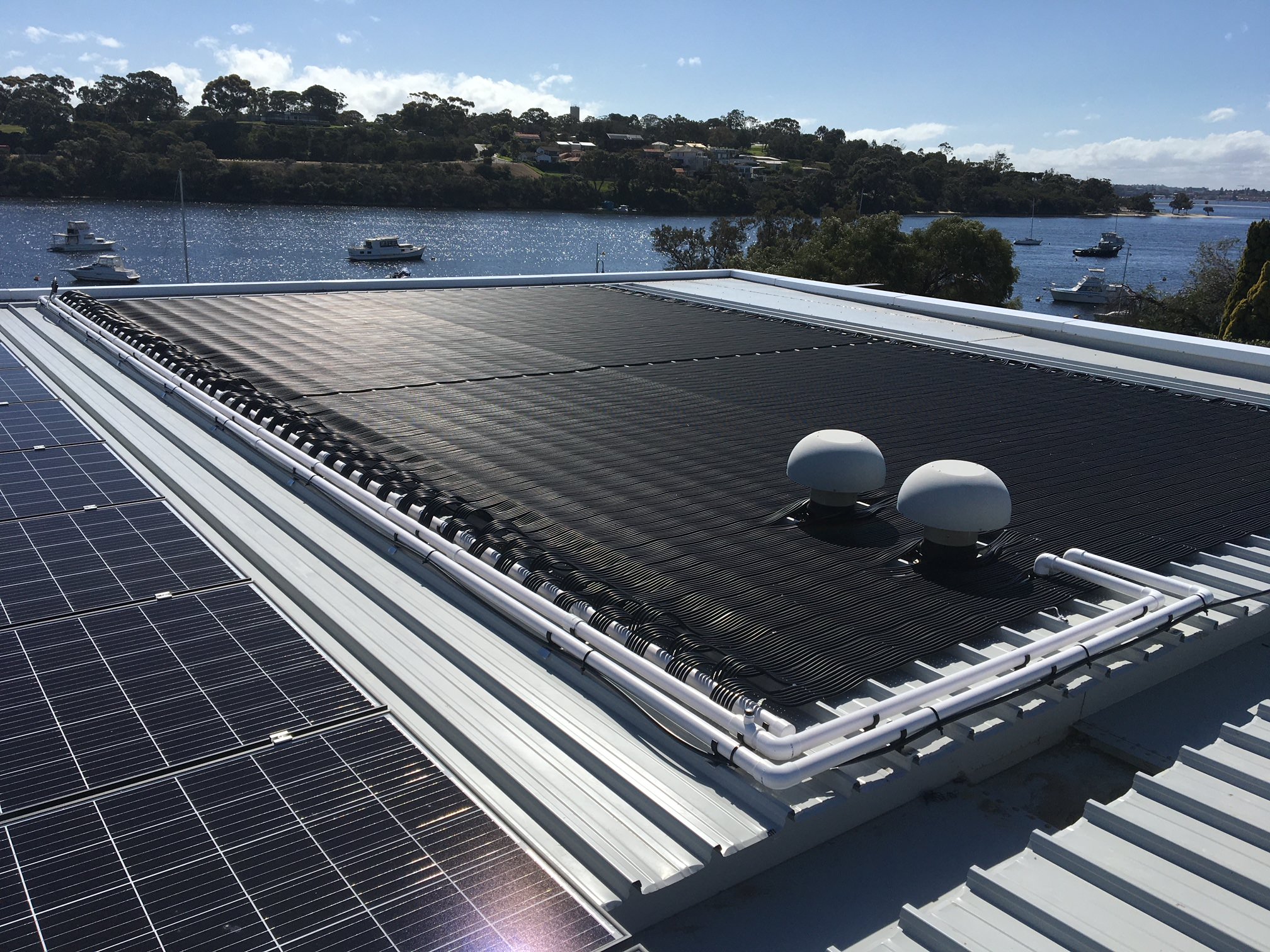
Find the right heat pump for your pool
Tell us about your pool and we will recommend a heat pump, solar, or both. Free and no obligation.